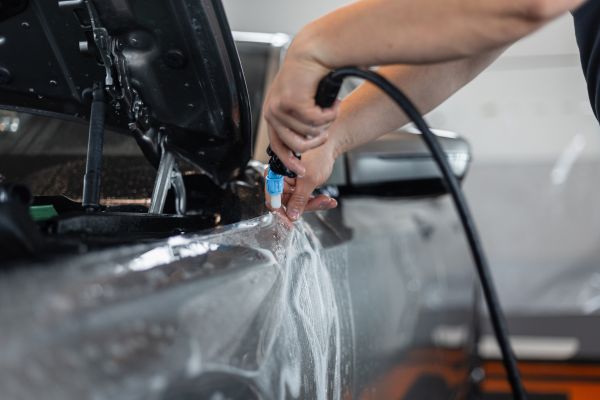
Paint protection film has changed a lot over the years. What once looked like a simple clear layer for the front bumper has become a serious part of modern vehicle care. Today’s PPF can protect paint from road debris, resist staining, improve gloss, repel water, and in many cases, heal light surface marks with heat. That last feature is the one that often gets the most attention: self-healing.
At first, self-healing PPF sounds almost too good to be true. A scratch appears, the car sits in the sun, and somehow the mark fades away. It feels a little futuristic, especially to someone who remembers older protective films that could yellow, crack, or show every scuff. But self-healing is not magic. It is a material feature built into the top layer of the film, and when it works properly, it can make a real difference in how a vehicle looks over time.
To understand why it matters, it helps to look at what self-healing actually means, what it can and cannot fix, and why the quality of the film is so important.
What Self-Healing PPF Really Means
Self-healing PPF is designed to recover from light surface scratches, swirl marks, and fine abrasions. These are the small marks that often appear from washing, drying, dusting, or everyday contact with the surface. They are not deep cuts. They are usually shallow marks in the outer top coat of the film.
The self-healing effect happens because the top layer of the PPF has elastic properties. When heat is applied, the surface can soften slightly and return toward its original shape. Sunlight, warm water, or controlled heat from an installer can help trigger this process. On a warm day, some light marks may fade naturally. In other cases, gentle heat may be needed.
This does not mean the film can repair severe damage. A deep gouge, torn film, sharp scrape, or heavy impact will not simply disappear. Self-healing is best understood as a way to maintain the surface appearance of the film, not as a cure for every type of damage.
The Role of the Top Coat
The self-healing ability of PPF mainly comes from the top coat. Modern paint protection film is usually made of several layers. There is an adhesive layer that bonds to the vehicle surface, a polyurethane film layer that provides flexibility and impact resistance, and a top coat that handles the outside environment.
That top coat is where much of the daily action happens. It faces sunlight, rain, dust, road grime, bird droppings, bug splatter, wash mitts, drying towels, and accidental contact. If the top coat is well made, it can resist staining, reduce minor scratches, and help the film keep its gloss or finish.
A weak top coat may look fine at first but show wear quickly. It may become dull, hold dirt, stain more easily, or lose its ability to recover from fine marks. This is why self-healing performance depends heavily on film quality. The phrase “self-healing” alone is not enough. The real question is how well the film heals, how long that behavior lasts, and how the surface performs after months or years of use.
Why Heat Matters
Heat is the trigger behind most self-healing behavior. When light scratches appear on the film’s surface, warmth helps the top coat relax and level out. This is why many installers demonstrate self-healing PPF with warm water or a heat gun. The mark fades because the surface layer is flexible enough to recover.
Natural sunlight can also help. A car parked outside on a warm day may gradually lose fine surface marks. This is especially useful for daily drivers because small wash marks can appear over time even with careful maintenance.
Still, heat needs to be handled sensibly. Professional installers know how to apply it safely. Car owners should be careful with direct heat tools because too much heat can damage film, paint, or nearby trim. Warm water and sunlight are usually safer for normal maintenance, while stronger heat should be left to experienced hands.
What Self-Healing Can Fix
Self-healing PPF is most useful for fine scratches, light swirl marks, and minor surface scuffs. These are the kinds of marks that come from ordinary life. A dusty car gets wiped too quickly. A drying towel drags a small bit of grit. A sleeve brushes against the door. Someone leans on the hood. None of these moments may cause serious damage, but together they can make a car look older than it is.
On unprotected paint, these light marks can slowly build up and reduce gloss. On self-healing PPF, many of them can fade before they become visually distracting. This is especially helpful on dark vehicles, where every swirl mark seems to show under sunlight or fuel station lighting.
Self-healing also matters for high-touch areas. Door cups, trunk ledges, side mirrors, and bumper zones are often exposed to small scratches. Protecting those areas with a film that can recover from light marks helps preserve a cleaner look.
What Self-Healing Cannot Do
It is just as important to understand the limits. Self-healing PPF cannot repair deep cuts, punctures, torn edges, or damage that goes through the film. If a sharp rock cuts into the film deeply enough, the film may protect the paint underneath, but the film itself may need repair or replacement.
It also cannot fix poor installation. If dirt is trapped under the film, if edges are lifting, or if the film was overstretched, self-healing will not solve those problems. The technology works on surface-level marks, not installation defects.
Another common misunderstanding is that self-healing means scratch-proof. It does not. The film can still be scratched. The difference is that lighter marks may recover more easily than they would on normal paint or lower-quality film. Owners still need to wash carefully and avoid harsh brushes, dirty towels, and abrasive cleaners.
Why Self-Healing Matters for Long-Term Appearance
The biggest value of self-healing PPF is long-term appearance. Cars do not usually lose their fresh look in one dramatic moment. More often, the finish slowly collects small marks, stains, dull patches, and signs of use. Self-healing helps fight that gradual aging process.
When a film can recover from light scratches, the car stays glossier and cleaner-looking for longer. The owner does not have to polish the paint repeatedly to remove minor defects, because the film is taking the abuse instead. This is especially useful because polishing removes a tiny amount of clear coat each time. PPF helps reduce the need for that kind of correction.
For newer vehicles, luxury cars, sports cars, and carefully maintained daily drivers, this can be a major benefit. The paint underneath remains better preserved, while the visible surface stays more presentable through normal driving and washing.
Self-Healing and Modern Vehicle Customization
PPF is no longer only about invisible protection. Matte, satin, gloss, colored, and specialty films have made it part of vehicle customization as well. A self-healing surface becomes even more important when the film is also contributing to the car’s look.
A satin or matte finish can lose its appeal if it becomes uneven or scratched. A gloss film can look tired if swirl marks build up. Self-healing technology helps preserve the intended finish, whether the goal is factory-like clarity or a more customized appearance.
This is why self-healing has become a common feature in premium automotive film solutions. It supports both protection and presentation. The film is not just taking damage; it is helping the vehicle maintain the look the owner chose in the first place.
The Installer Still Matters
Even the best self-healing film needs proper installation. PPF must be applied to a clean, prepared surface. The installer has to manage stretch, alignment, edges, moisture, and contamination. A skilled installer can make the film look almost invisible. A poor installation can make even a high-quality film look disappointing.
The installer can also guide the owner on care. Some films need time to cure after installation. During that period, washing and pressure washing may need to be avoided. Later, safe washing methods help preserve the self-healing top coat. Gentle shampoos, clean microfiber towels, and proper drying all make a difference.
Self-healing makes ownership easier, but it does not replace good habits. It works best when paired with careful maintenance.
How to Judge a Self-Healing PPF
When comparing films, it is useful to look beyond marketing phrases. A good self-healing PPF should have strong clarity, stable adhesive, resistance to yellowing, stain resistance, hydrophobic behavior, and a durable top coat. It should not only heal when brand new. It should continue to perform after real exposure to weather, washing, and road conditions.
Warranty terms can also help, though they should be read carefully. A long warranty sounds reassuring, but the details matter. Buyers should understand what is covered, what is excluded, and how claims are handled.
For installers and distributors, consistency is just as important. A film should behave predictably from roll to roll. It should stretch well, lay cleanly, and maintain its finish after installation. Self-healing is valuable, but only when the rest of the film performs properly too.
Conclusion
Self-healing PPF matters because it solves one of the most common problems in car care: the slow buildup of fine marks that make a vehicle look older and less carefully maintained. By allowing light scratches and swirl marks to fade with heat, a quality film helps preserve gloss, clarity, and surface smoothness over time.
It is not a miracle layer, and it is not immune to serious damage. Deep cuts, torn film, and poor maintenance can still create problems. But when used correctly, self-healing PPF gives car owners a practical advantage. It protects the paint underneath while keeping the visible surface looking fresher for longer.
In the end, the value of self-healing is not just about watching a scratch disappear. It is about confidence. The vehicle can be driven, washed, parked, and enjoyed with less worry over every tiny mark. For many owners, that is exactly what modern paint protection should offer.