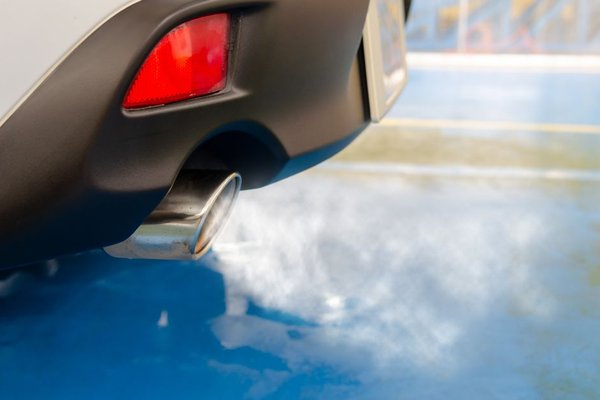
A blue haze behind your car is easy to dismiss, especially when it disappears after a few seconds. But blue smoke from exhaust usually means engine oil is entering an area where it gets burned. The most useful clue is when the smoke appears: at startup, after idling, under acceleration, or throughout the drive.
Those patterns can narrow the possibilities before anyone replaces parts. They cannot prove a diagnosis alone, but paired with oil consumption and engine behaviour, they give a mechanic a better starting point.
Why Does Burning Oil Produce Blue Exhaust Smoke?
Engine oil should lubricate moving parts, not burn with the fuel. When it passes worn seals, piston rings, or another failed barrier, it can reach the combustion chamber or hot exhaust stream and produce a blue-grey plume. The colour may look grey in bright sunlight, so a bluish tint and persistent burnt-oil smell are useful clues.
Brief white vapour on a cold morning is often condensation that disappears as the exhaust warms. Thick white smoke with coolant loss suggests a different fault. Smoke rising from beneath the bonnet may come from oil dripping onto hot external components rather than oil smoke from the tailpipe.
What the Timing of Blue Smoke Can Tell You
A puff immediately after a cold start
Oil can seep past ageing valve stem seals while an engine is parked. At startup, that accumulation burns, creating a short blue puff before the exhaust clears. This is a classic valve seal symptom, particularly after an overnight stop. Other oil-entry paths can cause startup smoke too.
Smoke after idling or accelerating after coasting
On many petrol engines, high intake vacuum during closed-throttle deceleration can draw oil past worn valve stem seals or guides. A puff when the throttle opens again strengthens that suspicion. Note whether it also happens after sitting at traffic lights.
Smoke during acceleration or climbing a hill
Blue smoke that increases under load may point towards worn piston rings or cylinder walls. These components normally help keep oil out of the combustion space. On turbocharged vehicles, oil entering through the turbocharger system is another possibility, especially if smoke changes as boost builds.
Smoke most of the time
Continuous blue exhaust smoke suggests oil is entering the airflow or cylinders regularly. Substantial internal wear, a crankcase ventilation fault, overfilled oil, or turbo-related trouble may be responsible. Heavy smoke with rapid oil loss deserves prompt attention.
The Main Blue Exhaust Smoke Causes
Worn valve stem seals and guides
Valve stem seals limit how much oil travels along each valve stem. When they harden or wear, oil can enter intake or exhaust passages. Typical valve seal symptoms include startup puffs, smoke after extended idling, and increased oil use without a visible external leak. Worn valve guides can create similar signs, so seals are not always the only issue.
Piston rings and cylinder wear
Piston rings seal combustion pressure and manage the oil film on cylinder walls. Stuck, damaged, or worn rings may admit excess oil. Other clues include rising oil consumption, crankcase blow-by, and sometimes reduced compression or power. Not every ring problem produces low compression, so one test rarely settles the diagnosis.
Turbocharger oil leakage
A turbocharger runs on pressurised engine oil. Bearing wear, restricted oil drainage, abnormal crankcase pressure, or intake restrictions can allow oil into the intake or exhaust side. Smoke may appear under boost or after idling. A smoky turbo does not automatically require replacement: its oil drain and ventilation system need checking first.
Crankcase ventilation and servicing problems
A faulty positive crankcase ventilation, or PCV, system can draw excess oil mist into the intake or increase crankcase pressure. Too much oil in the sump may encourage oil carryover. Check the manufacturer’s oil specification and whether the dipstick level is above maximum. These checks can prevent unnecessary major repairs.
How to Investigate Blue Smoke Without Guessing
Start an observation log. Imagine a car producing one blue puff each morning but driving cleanly afterward. That pattern gives a garage a different lead from a car leaving a blue trail whenever it climbs a hill. Record the conditions across several journeys rather than repeatedly revving a parked engine.
With the vehicle on level ground and the engine off, check the dipstick according to the owner’s manual. Note the reading, mileage, and date, then check again after a consistent driving distance. Top up only with the specified oil, without overfilling. For the basics, see checking engine oil correctly.
Look for stains beneath the car and external leaks; losing oil does not always mean burning it. If practical, ask someone standing safely away from traffic to watch the tailpipe during normal operation. Never stand behind a moving vehicle.
A workshop can inspect the PCV system, petrol-engine spark plugs, intake plumbing, and turbo oil lines where fitted. Compression and cylinder leak-down tests, possibly followed by a borescope inspection, help assess internal wear. Ask for findings before approving expensive repairs. Understanding common causes of engine oil loss provides additional context.
Is It Safe to Keep Driving?
A brief startup puff with a stable oil level is generally less urgent than dense smoke with misfiring, power loss, or rapidly falling oil. Persistent oil burning can foul spark plugs and damage emissions-control equipment; inadequate lubrication can seriously harm the engine.
Stop safely and arrange assistance if the oil-pressure warning illuminates, the engine knocks, power drops severely, or smoke becomes heavy. Do not keep driving simply because the car still moves. A turbocharged diesel that accelerates uncontrollably while producing heavy smoke is an emergency: get clear of danger and seek professional assistance.
Repair costs depend on the cause. A ventilation fault may be relatively straightforward, whereas valve-guide work, turbo repairs, or worn cylinders can be involved. Diagnosing the oil’s route avoids paying for the wrong fix. Engine misfire symptoms are also worth understanding when the exhaust smoke comes with rough running.
Frequently Asked Questions
Does blue smoke always mean piston rings are worn?
No. Valve seals, guides, turbocharger leakage, PCV faults, and excessive oil level can also cause it. Smoke timing and mechanical tests help distinguish them.
Why is there blue smoke only when I start the car?
Oil may have seeped past worn valve stem seals while the engine was off. A short startup puff fits that pattern, though a mechanic should confirm the source.
Can the wrong engine oil cause blue smoke?
Oil that does not meet the manufacturer’s specification or an overfilled sump can contribute to oil burning. Correcting that will not repair worn mechanical components.
Will blue smoke disappear on its own?
Condensation can clear naturally, but genuine oil-burning smoke generally requires its cause to be addressed. An occasional puff may come and go while oil consumption continues.
Conclusion
Blue smoke is most useful as a diagnostic clue. Startup puffs suggest checking valve seals; smoke under load brings rings and turbo faults into the picture; continuous smoke calls for a wider investigation. Track when it happens, monitor the oil level, and test the cause before replacing expensive components.