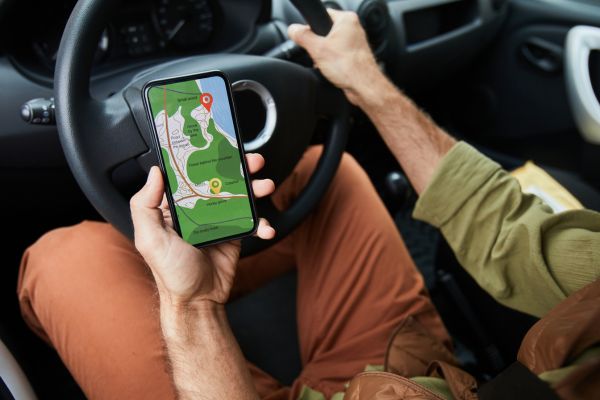
Morning traffic has a strange way of testing patience. One minute the road moves smoothly, the next it slows to a standstill for reasons nobody can immediately see. Drivers lean forward, searching for clues beyond rows of brake lights, wondering whether the delay will last two minutes or twenty. In moments like that, real-time traffic alerts for vehicles stop feeling like optional technology and start feeling essential.
Modern drivers no longer rely entirely on road signs, radio updates, or instinct. Vehicles and navigation systems now communicate with massive streams of live traffic data, warning drivers about accidents, lane closures, congestion, road hazards, and sudden slowdowns before they become visible ahead. It has changed the rhythm of driving itself.
What once felt unpredictable is now increasingly mapped, analyzed, and interpreted in real time.
The Evolution of Traffic Awareness on the Road
Before digital navigation systems became common, traffic information moved slowly. Local radio stations delivered periodic reports, usually focused on major highways during rush hour. Drivers often learned about delays only after becoming trapped inside them.
The arrival of GPS technology improved route planning, but early systems still lacked live awareness. Directions were static. They could guide drivers from one place to another, yet they couldn’t adapt intelligently when conditions changed unexpectedly.
Real-time traffic alerts changed that dynamic completely. By combining GPS positioning, mobile connectivity, cloud computing, and telematics infrastructure, navigation systems evolved into responsive travel assistants capable of reacting almost instantly to road conditions.
Today, traffic alerts are not simply updates. They are continuous conversations between vehicles, data networks, traffic sensors, and millions of connected devices moving through transportation systems simultaneously.
How Real-Time Traffic Alerts Actually Work
Most drivers see traffic alerts as simple notifications appearing on a screen, but the technology behind them is surprisingly layered.
Navigation platforms collect anonymous movement data from smartphones, connected vehicles, roadway cameras, sensors, and transportation agencies. When large groups of vehicles suddenly slow down on a particular stretch of road, systems recognize unusual traffic behavior almost immediately.
Algorithms then analyze the disruption and estimate its severity. Is traffic briefly slowing because of merging lanes, or is there a major accident ahead? The system compares live movement patterns with historical traffic behavior to determine what drivers should know.
Once the information is verified, alerts spread rapidly across connected navigation systems. Drivers may receive warnings about congestion, debris, weather hazards, road construction, or emergency activity within seconds.
It feels instantaneous because, in many ways, it nearly is.
The Psychology of Knowing What Lies Ahead
One of the biggest advantages of real-time traffic alerts for vehicles is not simply saving time. It is reducing uncertainty.
Unexpected traffic often creates frustration because drivers lack information. People become impatient when they cannot judge whether a delay is temporary or severe. A ten-minute slowdown feels longer when its cause remains invisible.
Traffic alerts change that emotional experience. Even when delays cannot be avoided, understanding the reason behind them lowers stress levels significantly. Drivers gain a sense of control because they can mentally prepare for what comes next.
That psychological effect is easy to underestimate. Calm drivers make better decisions, react more predictably, and generally experience less fatigue during long or difficult commutes.
In many ways, information itself becomes part of road safety.
Urban Driving and the Importance of Instant Updates
Cities expose the true value of live traffic intelligence more clearly than almost anywhere else.
Urban roads are dynamic environments where conditions shift constantly. Construction projects appear overnight. Delivery vehicles block lanes unexpectedly. Sporting events, concerts, weather changes, and accidents all reshape traffic flow within minutes.
Static navigation systems struggle in these environments because routes become outdated almost immediately. Real-time alerts help drivers adapt continuously rather than react too late.
Commuters in dense cities often rely heavily on rerouting systems that monitor congestion minute by minute. In some cases, alternate routes save only a few minutes. In others, they prevent drivers from sitting through gridlocked traffic for nearly an hour.
Still, rerouting is not always perfect. Some drivers grow frustrated when navigation systems aggressively redirect them through residential streets or unfamiliar shortcuts. The balance between efficiency and route stability remains one of the most debated aspects of modern navigation technology.
Real-Time Alerts Beyond Traffic Congestion
Traffic jams are only part of the picture. Modern vehicle alert systems increasingly monitor a wider range of roadway conditions.
Hazard reporting has become especially important. Drivers may receive warnings about stalled vehicles, objects in the roadway, sudden weather changes, flooded streets, icy conditions, or reduced visibility ahead.
Crowd-sourced reporting systems contribute heavily here. Drivers themselves often confirm hazards directly through navigation apps, creating collaborative road awareness networks that update far faster than traditional reporting systems ever could.
This community-driven model works remarkably well in busy regions where large numbers of users constantly contribute information. The more connected drivers participate, the more responsive the system becomes.
There is something quietly fascinating about that cooperation. Millions of strangers, moving independently, help build shared situational awareness without ever speaking to one another directly.
Connected Vehicles and Telematics Integration
Real-time traffic alerts for vehicles are becoming deeply integrated with broader telematics systems.
In commercial transportation, fleets now use live traffic intelligence to optimize delivery schedules, reduce fuel waste, and improve route efficiency. Dispatch systems monitor traffic patterns continuously, adjusting routes dynamically throughout the day.
Passenger vehicles are evolving similarly. Many modern cars now integrate live traffic feeds directly into dashboard displays rather than relying solely on smartphone apps. Navigation, fuel efficiency monitoring, predictive arrival estimates, and safety systems increasingly work together as connected ecosystems.
Some advanced systems even anticipate slowdowns before drivers receive visible traffic warnings. Predictive analytics examine traffic patterns, historical congestion behavior, and real-time movement trends to estimate future delays.
The road ahead is no longer just observed. It is increasingly predicted.
The Relationship Between Traffic Alerts and Fuel Consumption
Traffic congestion affects more than travel time. It also impacts fuel efficiency in significant ways.
Stop-and-go driving burns more fuel, increases brake wear, and creates unnecessary engine strain. Real-time traffic systems help reduce some of these inefficiencies by guiding drivers around heavy congestion or smoothing route timing.
For electric vehicles, traffic awareness becomes even more important. Battery range calculations depend heavily on driving conditions. Congested traffic, repeated acceleration, and rerouting can influence energy consumption more dramatically than many drivers realize.
Navigation systems designed for EVs now incorporate charging station availability, traffic flow, terrain changes, and battery predictions into route planning decisions.
As transportation shifts toward connected mobility systems, traffic alerts are becoming tied not only to convenience but also to energy management.
Privacy Questions Around Traffic Data
Despite their usefulness, traffic alert systems raise understandable privacy concerns.
Most real-time traffic platforms depend on location tracking and movement analysis to function effectively. Although data is generally anonymized, many drivers remain cautious about how much travel behavior is being collected, stored, or shared.
Different navigation systems handle privacy differently. Some offer stronger controls over tracking permissions and data retention, while others integrate deeply across connected services and user accounts.
For many people, the trade-off feels worthwhile because the convenience is immediate and tangible. Still, awareness around digital privacy continues growing, especially as connected vehicles collect larger volumes of behavioral information.
The conversation surrounding traffic technology is no longer only about efficiency. It increasingly includes questions about transparency, ownership, and digital trust.
Why Real-Time Traffic Systems Are Still Imperfect
Despite impressive advancements, no traffic alert system is flawless.
Data delays still happen. Construction updates may appear late. Crowd-sourced hazard reports can occasionally be inaccurate or outdated. In rural areas with fewer connected users, live traffic awareness may become less reliable.
Even advanced algorithms sometimes make questionable rerouting decisions. Drivers have likely experienced navigation systems recommending bizarre detours that save only seconds while adding confusion or stress.
Human behavior also complicates traffic prediction. When large numbers of drivers receive the same reroute suggestion simultaneously, alternate roads can quickly become congested themselves.
Traffic systems are intelligent, but they are still responding to highly unpredictable human movement patterns.
That unpredictability keeps driving from becoming entirely automated or perfectly optimized, at least for now.
The Future of Vehicle Traffic Intelligence
The future of traffic alerts will likely move beyond simple notifications into fully interconnected transportation ecosystems.
Vehicle-to-vehicle communication systems are already being tested in various regions. In theory, cars may eventually share braking events, hazard detection, speed changes, and road conditions directly with nearby vehicles in real time.
Smart infrastructure may also play a larger role. Traffic lights, road sensors, emergency systems, and connected vehicles could eventually coordinate dynamically to improve overall traffic flow.
Artificial intelligence will likely sharpen predictive traffic modeling further, helping systems anticipate congestion before it fully develops rather than merely reacting once it appears.
At the same time, augmented reality navigation displays may change how drivers interact with alerts altogether, overlaying live hazard information directly onto windshields or dashboard visuals.
The road network itself is slowly becoming more communicative.
Conclusion
Real-time traffic alerts for vehicles have transformed modern driving in ways that extend far beyond simple convenience. They help drivers avoid congestion, reduce uncertainty, improve fuel efficiency, and navigate increasingly complex transportation systems with greater confidence.
What makes these systems especially powerful is not merely the technology behind them, but the constant flow of shared information connecting millions of travelers together. Every slowdown detected, hazard reported, and route adjusted contributes to a broader picture of movement unfolding in real time.
Of course, traffic technology still has limitations. Roads remain unpredictable because people remain unpredictable. Yet the gap between reaction and awareness continues shrinking as telematics systems grow smarter and more connected.
For drivers today, the journey is no longer shaped only by the road ahead. It is shaped by the information traveling alongside it.