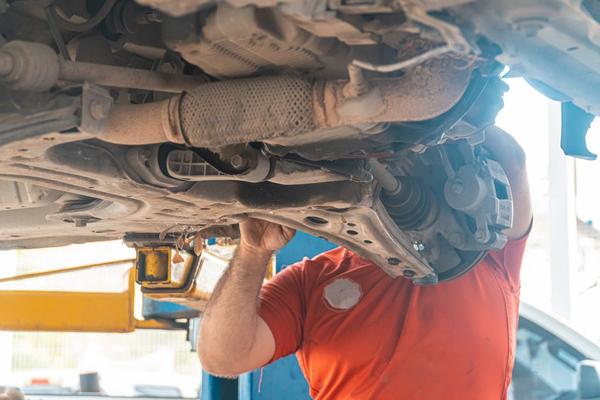
A repetitive click while pulling out of a parking space can sound minor. A shudder when accelerating feels different. Yet both can point to the same drivetrain component: a constant velocity (CV) joint. The useful clue is exactly when the symptom happens.
Bad CV joint symptoms differ depending on whether the worn joint is near the wheel or the transmission. Understanding that distinction helps you describe the fault and avoid replacing an axle when something else is responsible.
Why Inner and Outer CV Joints Behave Differently
On most front-wheel-drive vehicles, each front drive axle has an inner and outer CV joint. They transfer engine power to the wheel while accommodating steering and suspension movement. Many all-wheel-drive vehicles also use CV joints on driven axles.
The outer joint sits near the wheel and handles steering angles, making clicking during turns its familiar warning sign. The inner joint sits closer to the transmission and accommodates changes in axle length. Wear there is more likely to create shuddering or clunks under load. These are patterns, not guarantees.
Outer CV Joint Symptoms: Clicking When Turning
Rhythmic clicks in a tight corner
A worn outer joint often produces a repeated click, pop, or snapping sound during a slow, tight turn. The sound follows wheel rotation rather than engine speed. It may grow louder when you gently accelerate through the turn and fade with the steering straight.
Imagine pulling out of a supermarket parking bay: the car is quiet in a straight line, but makes evenly spaced clicks while turning sharply. That pattern makes an outer CV joint worth inspecting. A single steering-column click or a knock only over bumps suggests another cause.
A damaged boot and scattered grease
Each joint has a flexible protective boot filled with grease. When a boot splits, grease escapes and grit or water can enter. Dark, sticky grease may appear on the inner wheel face, wheel-well liner, or nearby suspension parts.
A torn boot does not prove the joint has failed. Caught before contamination or wear, a boot replacement may protect the original joint. Once internal wear causes clicking, replacing the joint or axle is more likely.
Inner CV Joint Symptoms: Vibration Under Acceleration
Inner CV joint vibration often feels like a shudder, shake, or pulse when power is applied. It may occur while accelerating from a stop or climbing a hill, then diminish when you ease off the throttle. Unlike outer-joint clicking, it need not involve steering.
Another sign is a clunk as drivetrain load changes, such as when shifting between drive and reverse after stopping or changing between acceleration and coasting. Excessive play inside the joint can do this, but worn engine mounts and other drivetrain parts can behave similarly.
These cv axle symptoms cannot be diagnosed from vibration alone. A shake that rises mainly with road speed, even while coasting, more often points toward tire balance, wheel damage, or tire condition than a CV joint.
Other Bad CV Joint Signs Worth Checking
The earliest warning can be visible. Look for cracked, loose, or grease-covered CV boots while the vehicle is parked safely. Never crawl beneath a car supported only by a jack or touch moving drivetrain components.
Symptoms sometimes progress gradually: clicking becomes more frequent or acceleration shuddering grows stronger. Advanced wear can interrupt power delivery to a driven wheel and cause further damage. Loud banging, severe shaking, or loss of drive calls for stopping safely and arranging assistance.
A Practical Way to Narrow Down the Fault
During ordinary driving in safe conditions, notice whether the symptom appears while steering, accelerating, coasting, or crossing bumps. Is the noise rhythmic? Does it seem to come from one side? Those observations help a technician narrow the possibilities.
For example, if a car clicks only during gentle acceleration through tight turns but runs smoothly straight ahead, suspect an outer joint. If it instead shudders under straight-line acceleration and settles when the throttle is released, an inner joint is more plausible. Neither observation conclusively identifies the fault or side.
A technician can inspect boots and shafts, assess joint play using the manufacturer’s procedure, and check surrounding components. Do not repeatedly perform full-lock turns to test a suspect axle; that adds stress without confirming a diagnosis.
What Else Can Mimic CV Axle Trouble?
Several problems overlap with bad cv joint signs. A wheel bearing often produces humming or growling that changes with speed or cornering load, rather than distinct clicks during powered turns. Comparing wheel bearing noise symptoms can help distinguish them.
Uneven tire wear, bent wheels, and imbalance often cause shaking that increases with road speed. If a vibration appears at a consistent speed even when coasting, examine tire vibration at highway speeds before blaming the axle.
Worn engine or transmission mounts can cause a thump when engaging gear or shudder under torque. Suspension joints and strut mounts may knock over bumps. The timing of symptoms is more useful than guessing by sound alone; worn engine mount symptoms offer another helpful comparison.
Repair Options and When to Stop Driving
Repair depends on the inspection. A quiet, intact joint needs no replacement. An early boot failure may be repairable if the joint is still clean and undamaged. For a noisy or worn joint, many workshops replace the complete axle assembly rather than rebuild one joint.
Arrange an inspection promptly for persistent clicking or shuddering. Avoid unnecessary driving if symptoms worsen. If the vehicle shakes violently, makes heavy metallic bangs, or loses normal drive, stop safely and request a tow. No mileage estimate can reliably predict when a failing joint will give out.
Frequently Asked Questions
Can a bad CV joint cause vibration without clicking?
Yes. A worn inner joint can shudder during acceleration without the outer-joint clicking noise. Tire, mount, and other drivetrain faults still need to be ruled out.
Does clicking when turning always mean a bad CV joint?
No. Repeated clicks in a powered, tight turn suggest an outer joint, but brake, steering, and suspension parts can also make noises. Inspection confirms the source.
Can a torn CV boot be repaired without replacing the axle?
Sometimes. If the joint remains quiet, clean, and undamaged, replacing the boot may be sufficient. A clicking or contaminated joint often requires replacement.
Is it safe to drive with a bad CV joint?
Risk varies and cannot be judged reliably from sound alone. Arrange diagnosis soon. Severe shaking, banging, or loss of drive warrants stopping safely and getting assistance.
The Key Difference to Remember
Outer joints tend to click rhythmically while turning; inner joints more often shudder under acceleration or clunk when load changes. A damaged boot adds a visual clue. Match symptoms to driving conditions, consider alternative causes, and inspect the axle before a manageable repair becomes a breakdown.