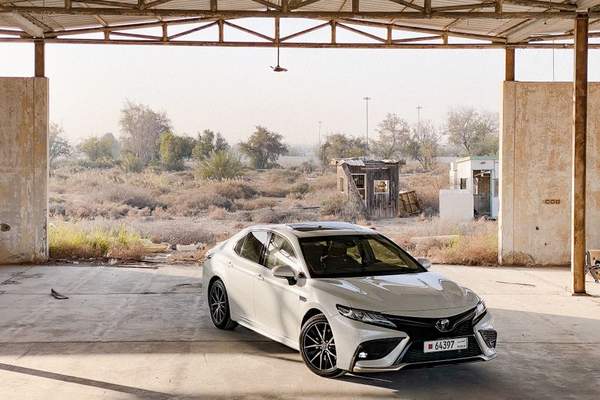
The Toyota Camry and Honda Accord have spent decades making the same promise: comfortable, sensible transportation without giving up an enjoyable drive. But choosing between them now requires more than comparing badges. The Camry is hybrid-only, while the Accord lets buyers choose a lower-priced turbocharged gasoline engine or a hybrid. Cabin space, traction, and the features included at each price matter just as much as fuel economy.
For an up-to-date U.S. comparison, the latest officially detailed Camry is the 2027 model, while Honda’s published Accord specifications are for 2026. The figures below identify those model years rather than presenting them as a perfectly matched pair.
First, Decide Which Powertrain You Actually Want
The 2027 Camry uses Toyota’s hybrid system in every trim. Front-wheel-drive models produce 225 combined horsepower, and available all-wheel drive raises output to 232 horsepower. That makes the Camry appealing if you want hybrid efficiency without having to climb into a premium trim.
The 2026 Accord offers a 192-horsepower turbocharged engine in LX and SE versions. Its Sport Hybrid, EX-L Hybrid, Sport-L Hybrid, and Touring Hybrid trims use a 204-horsepower hybrid system. All Accord versions are front-wheel drive. If all-wheel-drive traction is a firm requirement, the Camry wins this comparison before you even examine the dashboard.
Toyota Camry vs Honda Accord MPG: What the Numbers Mean
The 2027 Camry LE with front-wheel drive has a manufacturer-estimated 51 mpg combined. Honda rates the 2026 Accord EX-L Hybrid at an EPA-estimated 48 mpg combined; other Accord hybrid trims are rated at 44 mpg combined. The nonhybrid Accord LX earns 32 mpg combined.
These figures reveal a detail that broad comparisons often miss: trim selection changes the outcome. Larger wheels and different equipment can reduce efficiency, so comparing a Camry LE against an Accord Sport Hybrid is not the same as comparing two similarly equipped higher trims. Also, Toyota’s new-model figure is a manufacturer estimate, while Honda’s figures are EPA ratings.
At 12,000 miles annually, a hypothetical 51-mpg car uses about 235 gallons, versus 250 gallons at 48 mpg. That 15-gallon difference may be smaller than the impact of your purchase price, insurance premium, and driving habits. For additional context, a practical fuel economy calculator can help you compare your own commute instead of relying on headline ratings.
Comfort and Space: The Accord’s Practical Advantage
In a sedan interior comparison, start with the people who will sit in the back. The Accord provides 40.8 inches of rear legroom and a 16.7-cubic-foot trunk for 2026. That’s an attractive combination for families, airport trips, and passengers who regularly ride behind tall adults.
Bring your everyday equipment to a test drive. Put a stroller or two carry-on suitcases in both trunks, then sit behind a front seat adjusted for your actual driver. This five-minute exercise often settles a close contest more convincingly than advertised cabin measurements.
Driving Feel: Relaxed Efficiency or More Direct Response?
The Camry’s hybrid system delivers smooth low-speed assistance and reassuring power for merging. Its available all-wheel drive is useful where rain, snow, or steep driveways make extra traction desirable, although good tires remain essential. Camry sport-oriented trims also use different chassis tuning, so do not assume every version rides identically.
The Accord Hybrid feels responsive around town thanks to its electric-motor-focused operation. Drivers who enjoy predictable steering and a planted highway feel may prefer its character, although preferences vary by road surface and wheel size. Compare both on a rough street and at highway speed, not just during a short loop near the showroom.
Technology: Look Beyond Screen Size
For a sedan technology comparison, the 2027 Camry includes wireless Apple CarPlay and Android Auto compatibility, wireless charging, and five USB ports as standard equipment. Its touchscreen starts at 8 inches, with a 12.3-inch display available on selected trims.
The 2026 Accord has a 9-inch touchscreen in gasoline trims and a 12.3-inch display in hybrids. Wireless phone integration is supported, while the Touring Hybrid adds Google built-in and an upgraded Bose audio system. Both cabins offer useful modern connectivity, but their menu layouts and physical controls deserve hands-on testing. A car infotainment buying guide can help you evaluate usability, not just screen size.
Safety: Strong Results, Different Details
Both sedans provide driver-assistance features such as automatic emergency braking, adaptive cruise control, and lane-keeping support. For the 2026 model year, the Insurance Institute for Highway Safety awarded the Camry Top Safety Pick+ and the Accord Top Safety Pick. Both performed well in major crashworthiness tests, although an award difference should not be treated as a complete prediction of real-world safety.
Check the specific trim for features such as parking sensors, blind-spot monitoring, and camera coverage. Driver-assistance systems have limits, and the clearest sightlines and easiest controls for your household may matter more than a long equipment list. A midsize sedan safety features checklist is useful when comparing dealer window stickers.
Price and Value: Compare the Car You Would Actually Buy
The 2027 Camry starts at $29,700 before destination and other charges. The 2026 Accord LX starts at $28,395, but that price buys the gasoline version, not the hybrid. The Accord Sport Hybrid starts at $33,795, while Toyota offers its hybrid powertrain from the Camry’s entry trim. These are manufacturer starting prices, not guaranteed local transaction prices.
A fair sedan value comparison includes similar equipment, taxes, financing, fuel, and insurance over several years. For example, an Accord LX can look cheaper at the dealership, but a high-mileage commuter may recover some of a Camry’s price difference through fuel savings. Someone driving only 5,000 miles yearly may reasonably prioritize the Accord’s cabin space or upfront cost instead.
Frequently Asked Questions
Is the Toyota Camry more fuel-efficient than the Honda Accord?
On the cited ratings, the 2027 Camry LE’s estimated 51 mpg combined exceeds the 2026 Accord EX-L Hybrid’s 48 mpg and the gasoline Accord LX’s 32 mpg. Actual results depend on trim, conditions, and driving style.
Does the Honda Accord have more cargo room?
Yes. The 2026 Accord offers 16.7 cubic feet of trunk space, more than the Camry. Its generous rear legroom also makes it particularly appealing for frequent adult passengers.
Can you buy an all-wheel-drive Honda Accord?
No. The 2026 Accord is front-wheel drive only. The 2027 Camry offers electronic on-demand all-wheel drive across its trim lineup.
Which should I buy for a long commute?
Start with the Camry LE if fuel economy is your highest priority, then test the Accord Hybrid for seat comfort and highway refinement. Compare insurance quotes and total ownership costs before making the decision.
Final Verdict
The Toyota Camry makes the stronger case for shoppers who want efficient hybrid driving without moving up the trim ladder, particularly if all-wheel drive is important. The Honda Accord counters with a spacious back seat, a bigger trunk, and a choice between gasoline and hybrid power. Take both for the same route, compare matched equipment, and let your daily needs—not a brand rivalry—decide.