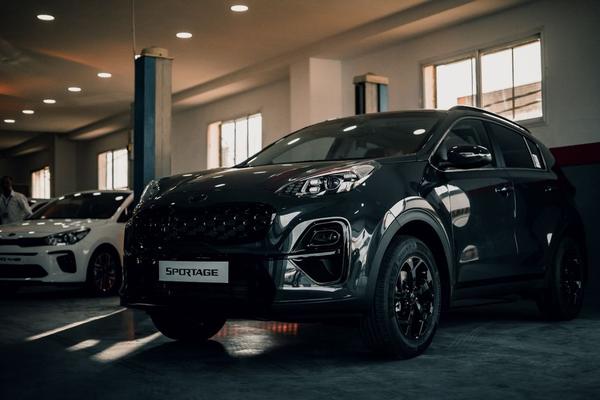
The Kia Sportage makes a persuasive case for choosing a compact SUV with the priorities in the right order: room for people, room for their belongings, useful technology, and a ride that does not turn an ordinary commute into work. Its striking exterior gets attention, but everyday practicality is the more lasting reason to consider it. This Kia Sportage review focuses on the current U.S. lineup, including the 2027 gas, hybrid, and plug-in hybrid choices, and where each makes sense.
Comfort: A Compact SUV That Feels Generous
Step inside and the Sportage feels less cramped than its compact classification suggests. The front seats offer ample adjustment, the dashboard has a modern horizontal layout, and the driving position provides a useful view of the road. Materials and seat upholstery vary by trim, so an LX will not feel identical to a higher-spec model.
The Kia Sportage interior has a particularly appealing second row. Kia lists 41.3 inches of rear legroom, which helps adult passengers sit comfortably behind taller front occupants. For households regularly carrying teenagers, grandparents, or friends, that extra space matters more than an elaborate dashboard animation.
Kia Sportage Cargo Space: Its Everyday Advantage
The gasoline Sportage offers up to 39.6 cubic feet of cargo space behind the rear seats, a generous figure for this class. Folding the rear seats creates more room for longer items, while the available adjustable cargo floor helps manage different loads. Cargo dimensions vary somewhat among gas, hybrid, and plug-in hybrid models, so do not assume identical capacity across all three.
Imagine a Saturday with a stroller, two grocery bags, and a sports kit. The Sportage’s broad luggage area makes that combination more manageable without folding a passenger seat. Still, cubic-foot figures cannot tell you whether a particular stroller fits upright or whether a bulky cooler clears the hatch opening.
Bring your own largest item to the dealership if cargo use will decide the purchase. Check the lift-over height, loading lip, and space remaining with the rear seats in their normal positions. For shoppers comparing models, a compact SUV cargo space comparison can clarify whether the Sportage’s advantage matches their actual needs.
Driving Experience: Relaxed Rather Than Sporty
The standard gasoline engine is a 2.5-liter four-cylinder producing 187 horsepower, paired with an eight-speed automatic transmission. It handles typical commuting, errands, and highway cruising, although acceleration is not the Sportage’s strongest argument. Drivers who frequently merge onto fast highways with a full load should test it under similar conditions.
Steering is predictable and the vehicle feels settled in routine driving, but those looking for especially eager acceleration or engaging cornering may prefer a different SUV. Available all-wheel drive brings additional traction for slippery conditions; it does not replace suitable tires or careful driving.
The hybrid offers a useful alternative. Its turbocharged gas-electric system produces a combined 232 horsepower for 2027, giving it a stronger powertrain on paper as well as better fuel economy. The plug-in hybrid adds the possibility of electric driving on shorter trips when regularly charged at home.
Kia Sportage MPG: Choosing the Right Powertrain
Fuel economy changes substantially depending on the version. For 2027, a front-wheel-drive gasoline Sportage is EPA-rated at 25 mpg city, 33 highway, and 28 combined. Many gasoline all-wheel-drive trims are rated at 26 mpg combined, while the X-Pro’s rating is lower.
The 2027 Sportage Hybrid earns an EPA-estimated 41 mpg combined with front-wheel drive or 35 mpg combined with all-wheel drive. These differences are meaningful for high-mileage drivers, particularly those spending time in stop-and-go traffic. The hybrid does not need to be plugged in.
A plug-in hybrid makes more sense when charging is convenient and regular. Its value depends on electricity rates, trip lengths, and how often the battery is charged. Compare estimated annual costs rather than assuming the most electrified model must always be cheapest. A gas-versus-hybrid SUV cost comparison is useful when weighing purchase price against projected fuel savings.
Technology and Kia Sportage Features
The current Sportage has a standard 12.3-inch touchscreen, with wireless Apple CarPlay and Android Auto available as standard equipment on the latest lineup. Higher trims add features such as a digital instrument display, premium audio, enhanced parking cameras, and additional driver-assistance technology.
Feature availability is trim-dependent, especially for conveniences such as a panoramic sunroof, heated seating, wireless charging, and a power liftgate. Compare the actual equipment list for the vehicle on the dealer’s lot rather than relying on photos of the most expensive version.
Safety: Strong Results, With an Important Detail
The Sportage offers standard automatic emergency braking and lane-related assistance, with additional blind-spot, parking, and highway-driving aids available depending on trim. These systems provide support, not a substitute for an attentive driver.
The Insurance Institute for Highway Safety awarded the 2026 Sportage its TOP SAFETY PICK+ designation, but the award applies only to vehicles built after May 2025. That production-date qualification matters when shopping remaining 2026 inventory. Ratings for a 2027 model should be checked separately rather than assumed from the previous model year. Families can also consult a child car seat fitting guide before evaluating rear-seat access and anchor positions.
Pricing and Everyday Value
For 2027, Kia lists the gasoline Sportage LX with front-wheel drive from $28,990, the Sportage Hybrid from $30,590, and the plug-in hybrid from $40,590. These are starting manufacturer’s suggested retail prices, excluding a $1,495 destination fee, taxes, options, and dealer charges. Actual transaction prices may differ.
The Sportage’s strength is that comfort, passenger room, and cargo usefulness are not reserved for luxury-priced trims. Its weaker points are the modest urgency of the standard engine and the possibility that appealing technology quickly raises the sticker price.
Frequently Asked Questions
Is the Kia Sportage a good family SUV?
Yes, particularly for families seeking generous rear legroom and a practical luggage area without moving to a larger SUV. Check car-seat fit and stroller clearance with your own equipment before buying.
How much cargo space does the Kia Sportage have?
The gasoline model offers up to 39.6 cubic feet behind the second row. Hybrid and plug-in hybrid cargo measurements may differ, so compare the specification for the exact model you want.
Is the Sportage Hybrid worth the extra money?
It may be for drivers covering substantial annual mileage or spending lots of time in city traffic. The 2027 front-wheel-drive hybrid’s 41 mpg combined rating compares favorably with the gasoline front-wheel-drive model’s 28 mpg.
Is the Kia Sportage good on the highway?
It is comfortable and composed for ordinary highway travel. However, shoppers wanting brisk passing acceleration should compare the gasoline and hybrid versions back to back.
Final Verdict
The Kia Sportage succeeds by making normal life easier. Spacious rear seating, flexible cargo storage, useful technology, and comfortable road manners make it a sensible compact SUV shortlist choice. Choose the gasoline version for straightforward value, the hybrid for better fuel efficiency and added power, or the plug-in hybrid if you can charge consistently. The best Sportage is the one whose real-world practicality justifies its final price.